What is açaí?
A guide to the Amazon's purple fruit.
Where it grows, how it's harvested, what it tastes like, the formats you'll find in New Zealand, and how to say it.

By the Savor Amazon team · Updated · 5 min read

Açaí (said ah-sah-EE) is the small, dark purple fruit of a palm tree that grows in the Brazilian Amazon. Most of it comes from the state of Pará. It spoils within a day or so of picking, which is why the açaí you eat in New Zealand arrives frozen or as a powder.
- Açaí comes from the açaí palm, Euterpe oleracea, native to the eastern Amazon.
- The fruit is mostly seed, with a thin layer of edible pulp and skin.
- Pure açaí tastes earthy and slightly bitter, not sweet.
- You'll find it as frozen pulp, frozen sorbets and blends, or freeze-dried powder. Savor is an organic açaí sorbet.
A palm fruit from the Amazon
Açaí grows on a slender palm, Euterpe oleracea, that grows in clumps and can reach around 30 metres. It's native to northern South America and most at home in the eastern Amazon around the river estuary, in the Brazilian states of Pará, Amapá and Maranhão. A related palm, Euterpe precatoria, is also harvested in the western Amazon.
Pará is the heart of it. Brazil's statistics agency, IBGE, puts Pará at about 90% of the country's açaí. Most of that now comes from cultivated or managed areas rather than wild forest.
People often call it the açaí berry, but botanically it's a drupe: a stone fruit, like a tiny olive or cherry. Each fruit is about 1 to 2 cm across, green when unripe and violet-black when ripe. It's mostly seed, wrapped in a thin layer of edible pulp and skin.
How açaí is harvested
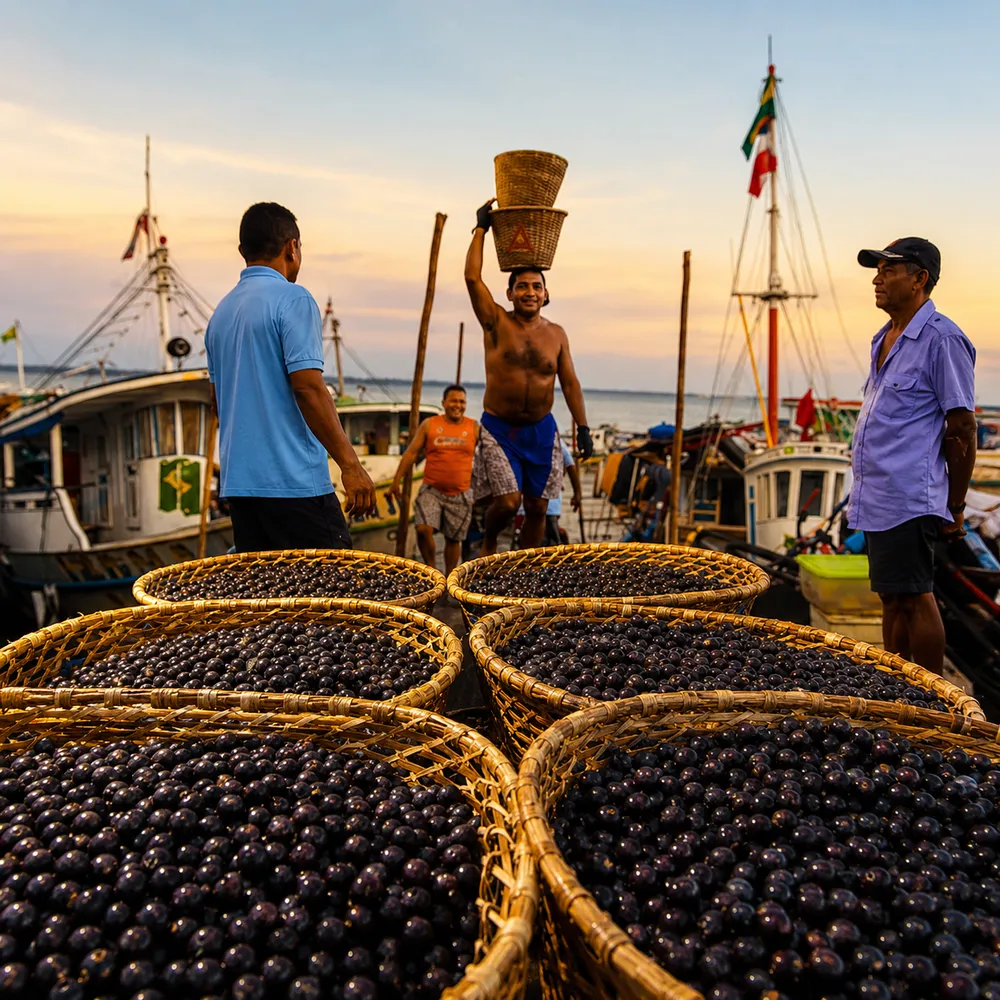
Açaí grows in heavy bunches at the top of the palm, and it is picked by hand. Harvesters climb the trunk using a peconha, a loop of fibre around both feet, and cut the bunch with a knife. The main harvest in Pará runs from about July or August through to December or January, and early morning is the recommended time to pick.
Speed matters from then on. Açaí spoils quickly, so it needs to be processed within about a day. The fruit is washed, softened in water and passed through a depulping machine that separates the pulp and skin from the seed. In Brazil, açaí pulp is then pasteurised or blanched for food safety before it is frozen.
What does açaí taste like?
Pure açaí pulp is not sweet. It's usually described as earthy and rich, with a slightly bitter edge. One nineteenth-century naturalist called it nut-flavoured. The pulp contains very little sugar and is relatively high in fat, which gives it a creamy feel.
That's why almost every açaí bowl you buy, here or in Brazil, is sweetened in some way. The deep purple colour comes from anthocyanins, the natural pigments also found in blackcurrants and red cabbage.
How it's eaten in Brazil
In Pará, açaí isn't a dessert. It's an everyday food, eaten thick and usually unsweetened with cassava flour (farinha) and often fried fish or shrimp. Travellers recorded street sellers in Belém selling it more than 170 years ago.
The sweet, frozen style came later. Through the 1980s and 1990s, frozen açaí travelled south to Rio de Janeiro and São Paulo, where it was blended with guaraná syrup and served in bowls (açaí na tigela) with granola and banana. That's the version that went global. Our topping guide covers the Brazilian classics.
Pulp, sorbet or powder: the main formats
Açaí reaches New Zealand in a few forms. None is "fake", but they are different products, and the ingredient list tells you which one you're eating.
| Format | What it is | How it tastes |
|---|---|---|
| Frozen pulp | Açaí pulp separated from the seed with water, then frozen. Sometimes unsweetened. | Earthy and slightly bitter unless sweetened. |
| Frozen sorbet or blend | Açaí pulp frozen with sugar and texture ingredients, ready to scoop or serve as soft-serve. | Sweet, smooth and consistent. |
| Freeze-dried powder | Pulp with nearly all the water removed. Shelf-stable and very concentrated. | Needs liquid and usually sweetening. |
Savor is a sorbet. Organic açaí is the first ingredient, followed by organic cane sugar, organic maltodextrin, xanthan gum, citric acid and guarana extract. It's certified organic by Ecocert and has no artificial colours. When choosing any açaí product, read the label: açaí should be near the top of the list, and you'll know how it has been sweetened. We've put our full panel in the nutrition guide.
How to pronounce açaí
Açaí has three syllables, with the stress on the last one: ah-sah-EE.
- The ç (c with a cedilla) is a soft "s". Without it, "acai" would be read "a-kai".
- The accent on the í tells you that the final i is its own syllable, and the stressed one.
The word came into Portuguese from a Tupi-Guarani language of Brazil. You'll often read that it means "fruit that cries", but that meaning rests on a reconstructed word rather than a documented one, so treat it as a nice story.
Where to try açaí in New Zealand
You can try Savor açaí at our partner cafés and bowl shops in Auckland, the Bay of Islands and Paraparaumu, and from 30 October 2026 at our new kiosk in Palmerston North. See the full list in where to get an açaí bowl.
Run a café? Our guide for operators covers formats, storage and cost per serve.
Frequently asked questions
What is açaí?
The small, dark purple fruit of the açaí palm (Euterpe oleracea), which grows in the Brazilian Amazon, mostly in Pará.
Is açaí a berry?
It's often called a berry, but botanically it's a drupe: a stone fruit with one large seed and a thin layer of pulp.
What does acai taste like?
Pure açaí is earthy, rich and slightly bitter. Most bowls are sweetened, so they taste sweeter and fruitier.
How do you pronounce açaí?
ah-sah-EE, with three syllables and the stress on the last one.
Is Savor açaí sweetened?
Yes. Savor is an organic açaí sorbet made with organic cane sugar, organic maltodextrin, xanthan gum, citric acid and guarana extract.
Savor Amazon
Try it at a partner store
Find participating Savor açaí stores across New Zealand and see how the Purple Pass works.
-
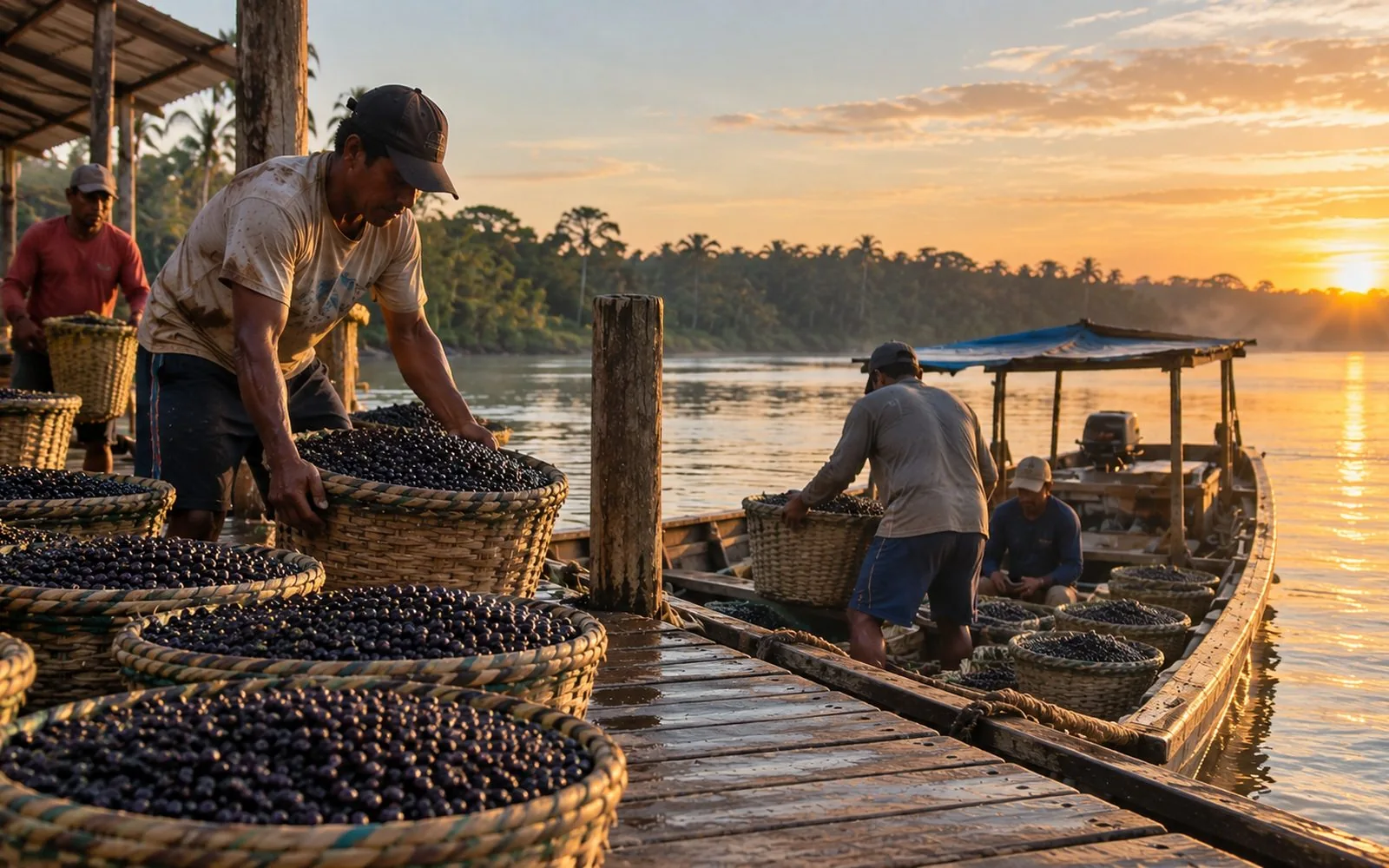
From Pará to your bowl: where Savor açaí comes from
How Savor açaí is harvested in Pará, made into an organic sorbet and brought to New Zealand.
Read story -
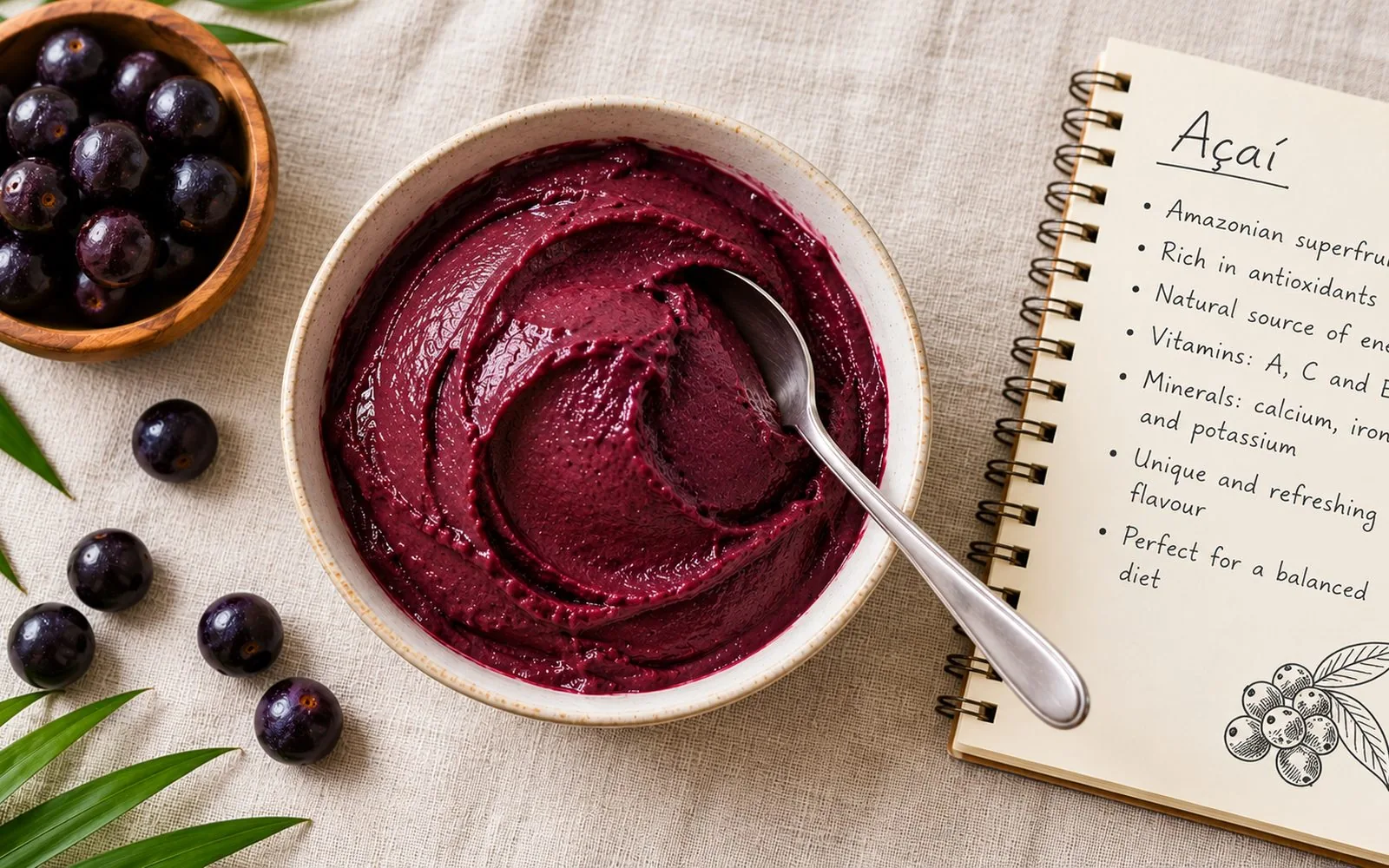
Açaí bowl calories and nutrition, straight from our label
The full Savor nutrition panel in kJ and kcal, what each ingredient does, and how to estimate the numbers for a whole bowl.
Read guide -
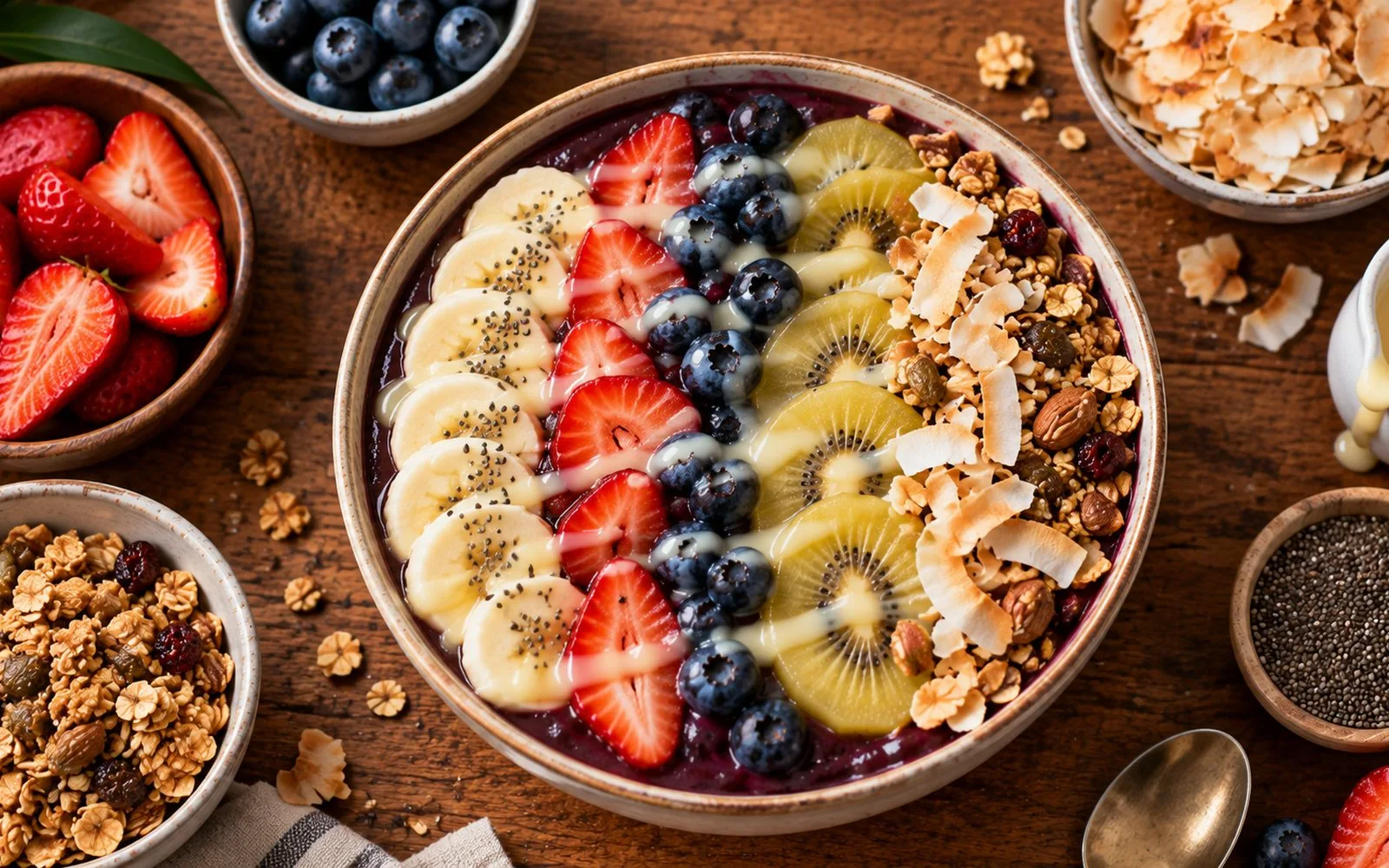
Açaí bowl toppings: Brazilian classics and Kiwi favourites
What Brazilians put on açaí, the Kiwi fruit that works best, five combos to try and how to build a bowl.
Read guide


